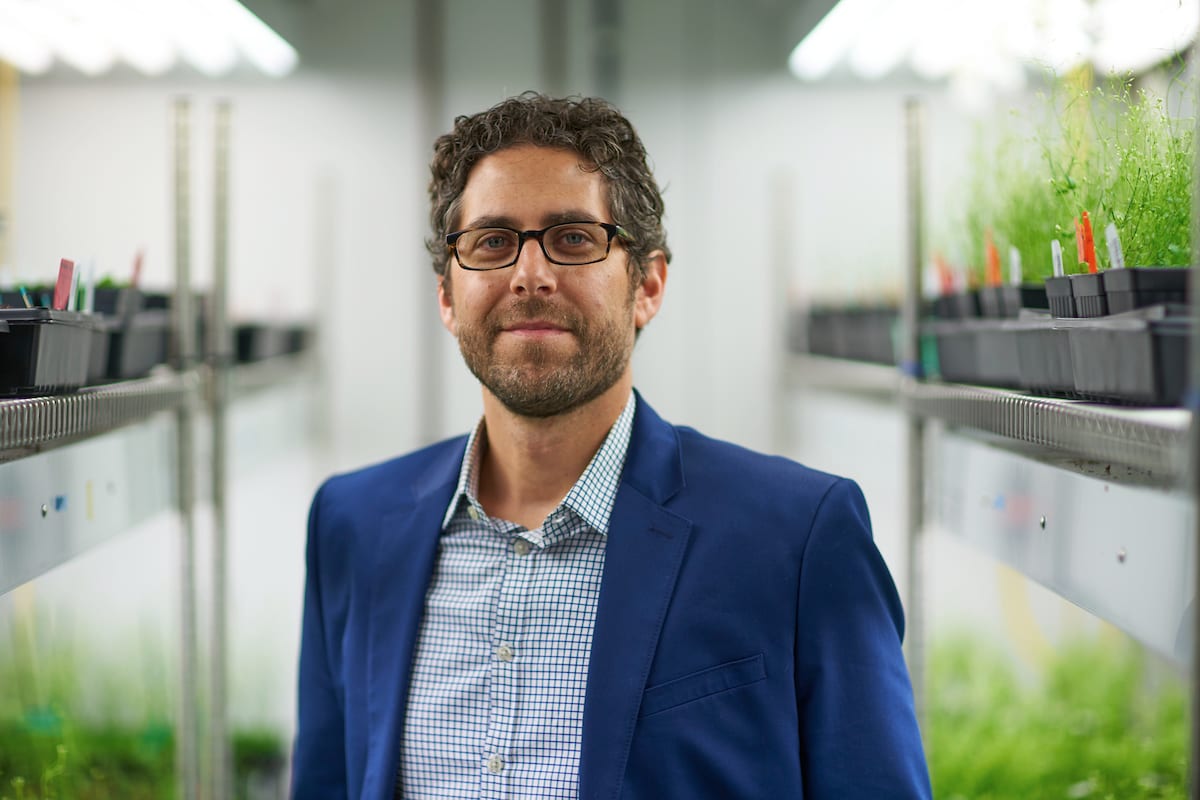
Ashley Snouffer, PhD, traces her love of plants back to tending a garden with her grandmother. As she learned how to care for flowers and herbs, she developed an early curiosity about the living world that would eventually shape her career. What drew her deeper into plant science, she says, is something that still captivates her today: the remarkable diversity and extraordinary abilities of the plant kingdom.
"Plants have evolved to thrive in such an incredible variety of environments," Ashley explains. "And their ability to heal wounds or even regenerate entirely new plants from just a few cells never ceases to amaze me.”
Over the course of 14 years in plant science, Ashley has built her research around harnessing and expanding that regenerative potential. She works on enhancing genetic transformation and regeneration systems in key crop species like cassava, sorghum, and tomato. Her lab combines the power of new technologies with strategic operational improvements to transformation protocols in an effort to make genetic transformation faster, more reliable, and more accessible to a broader range of species. Her lab is especially interested in morphogenic genes, which are regulators that can trigger cell proliferation and unlock regeneration in tissues (like leaves) that would not ordinarily give rise to new plants.
From Cells to Crops
At the heart of Ashley's research is a fundamental question: how does a plant grow from just a few cells into a complete organism? Answering that question has real-world stakes. Genetic transformation—the ability to introduce new traits into crop plants—depends entirely on the ability to regenerate a whole, healthy plant from transformed cells. When that process is slow, inefficient, or limited to certain tissue types, it becomes a bottleneck for crop improvement.
Ashley's team works to remove those bottlenecks. One of her proudest achievements is reducing the time required to regenerate cassava plants by developing a leaf tissue-based protocol—a significant advance for a crop that is a vital food source for hundreds of millions of people. Her work on other crops follows the same principle: understand the biology deeply enough to engineer better, faster, more reliable systems.
"What motivates me is having a tangible impact," she says. "Generating crops that can be tested for improved characteristics—that’s what keeps me inspired."
Faster, more precise crop improvement means crops that are more nutritious, more resilient to climate stress, and better suited to feed a growing world.