A Prairie Fire with a Purpose: How Controlled Burns Help Restore Native Habitat—and Inspire Future Farming
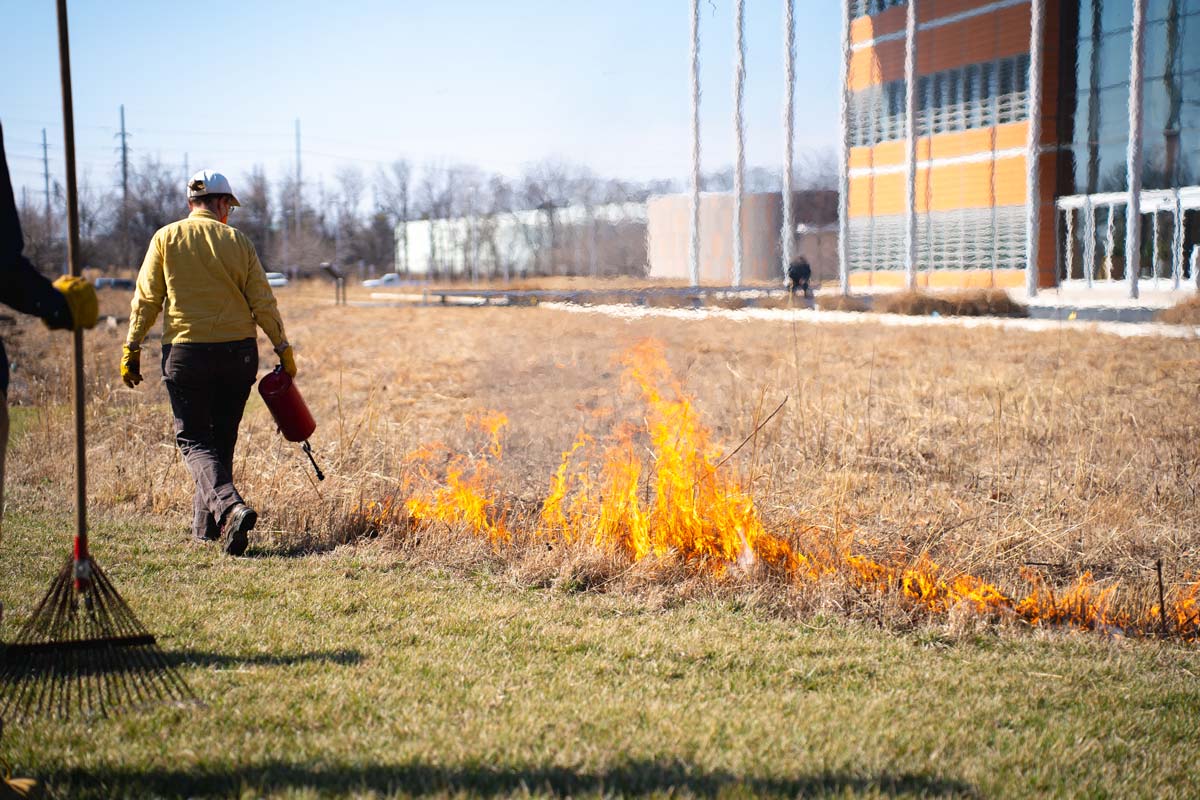
On the afternoon of Saturday, February 21, the Donald Danforth Plant Science Center carried out a controlled (prescribed) burn of the Center’s six-acre reconstructed native Missouri tallgrass prairie. If you were nearby, you may have seen a thin column of smoke rising above campus—an intentional, carefully managed fire that does something surprisingly hopeful: it helps a prairie thrive.
If you watched KMOV Channel 4 this weekend, you may have seen a glimpse of the burn during the 5 p.m. news—here’s the story behind what you saw.
Prescribed fire is one of the most important tools for maintaining healthy prairie ecosystems. Prairies evolved with periodic fire—sparked by lightning and also used for centuries by Indigenous communities as a land management practice. Today, controlled burns help mimic that natural cycle by clearing built-up thatch, curbing woody encroachment, suppressing some invasive plants, recycling nutrients back into the soil, and supporting native plant diversity and wildlife habitat.

Why Burn a Prairie at a Plant Science Research Center?
At the Danforth Center, our prairie is more than a beautiful landscape—it’s a living example of plant biodiversity in action, and a reminder that resilient ecosystems and resilient agriculture are deeply connected.
Before restoration began, this area was a turfgrass monoculture that cost roughly $45,000 per year to maintain. Today, the established prairie costs about $15,000 annually, while providing an ecosystem with outsized benefits: deep-rooted native grasses and wildflowers that build healthier soils, support pollinators, and create habitat for wildlife. Since restoration, we’ve documented 75 species of native plants, 29 species of birds, and ongoing biodiversity activity including a bee diversity study in collaboration with Saint Louis University. The prairie is also a participant in the Monarch Larva Monitoring Project (Site ID #11612).
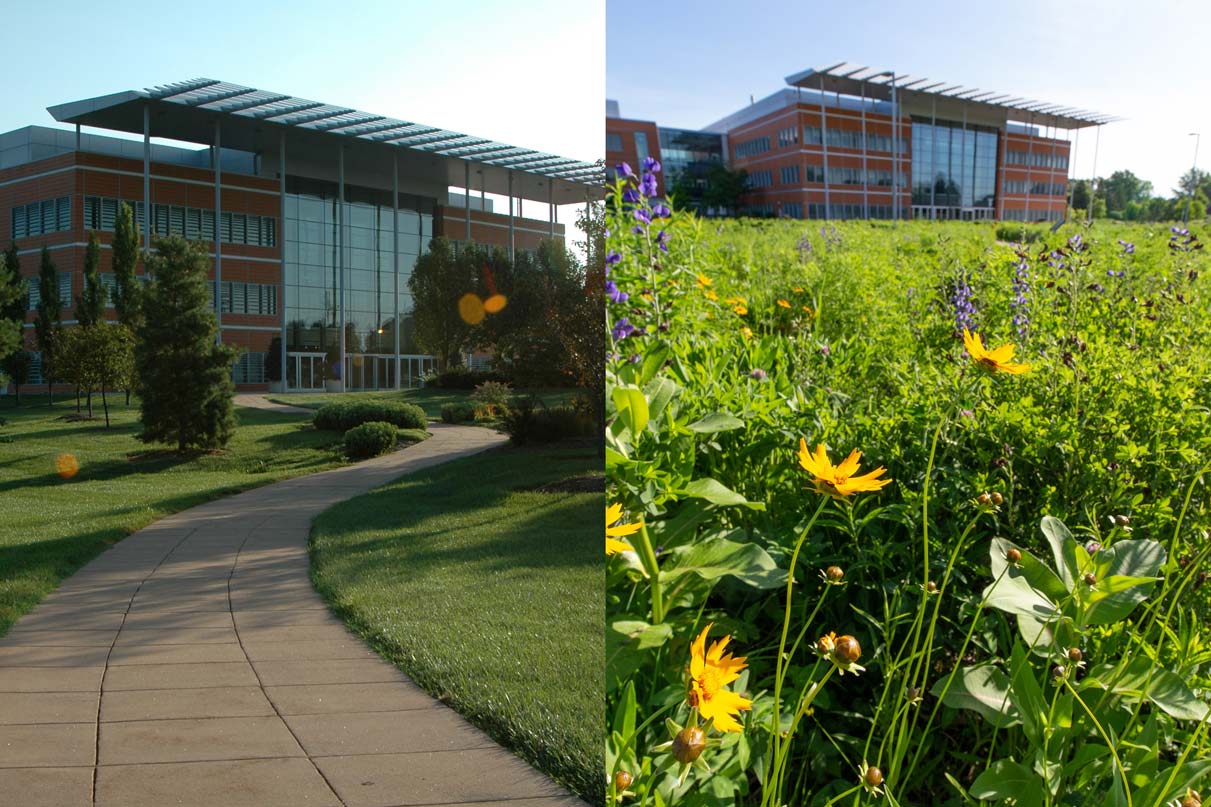
Left: conventional lawnscape pre-2015. Right: Re-created native Missouri prairie in recent years.
Native prairie plants also offer a powerful lesson in sustainability. Prairie grasses have dense, extensive root systems that help store carbon underground—one reason prairies are increasingly recognized for their potential role in addressing climate change while improving soil health.
From Wild Grasses to the Future of Food
The science connection runs even deeper. Many of the world’s major crops—like wheat, corn, and rice—are grasses. And the wild relatives of those cereal crops are a treasure trove of traits that can help agriculture adapt to a changing climate.
Two Danforth Center scientists are helping connect prairie plants to the future of food:
- Dr. Elizabeth Kellogg, one of the world’s foremost experts on grasses, studies wild grass diversity and the evolutionary relationships that connect wild species to modern grain crops.
- Dr. Allison Miller leads prairie-inspired research focused on developing more sustainable, resilient crops—including work related to perennial grains such as perennial wheat, which could help reduce soil erosion and nutrient runoff while improving long-term field health.
By learning from native species that have evolved to thrive through heat, drought, fire, and flood, researchers can apply those insights to build crops and agricultural systems that are more regenerative—better for farmers, better for ecosystems, and better for long-term food security.
“Prairies are a powerful example of resilience—plants working together to build healthy soil, support biodiversity, and recover after disturbance,” said Dr. Giles Oldroyd, Danforth Center president. “At the Danforth Center, we study plants to improve the human condition, and our prairie helps connect that mission to the landscapes and agricultural systems we all depend on. This controlled burn is a practical stewardship tool—and it’s also a reminder that nature has already solved many of the challenges we face in building a more sustainable future.”
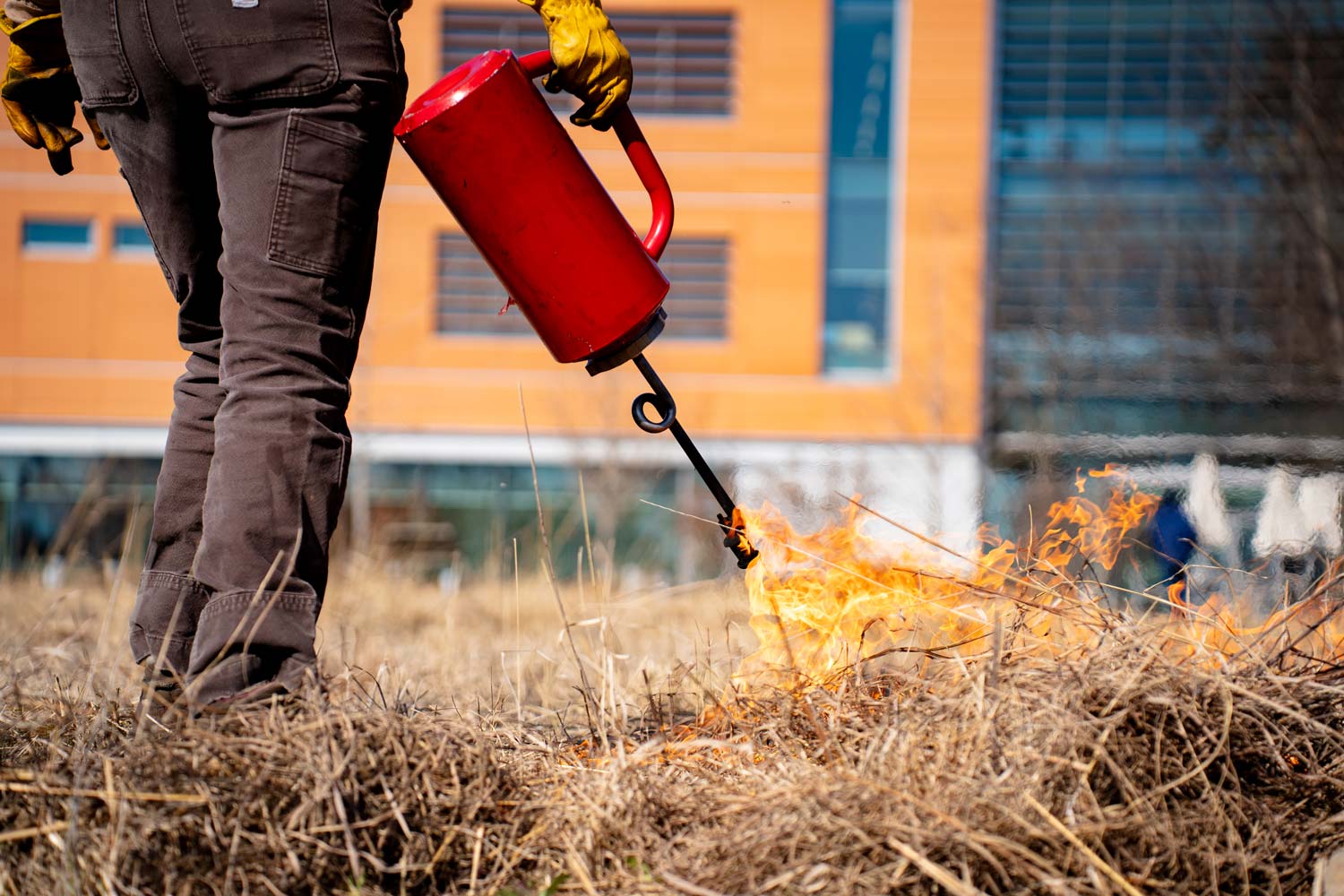
Ecologist uses a drip torch to light the controlled burn on the Danforth Center prairie.
Safety First, Always
A prescribed burn is never casual. Saturday’s burn was conducted by trained professionals following established protocols and only under appropriate weather and safety conditions. Teams staged equipment, established safety lines, monitored fire behavior, and ensured the burn stayed within planned boundaries. Conditions are evaluated continuously, and burns are delayed or canceled if weather or safety factors change.
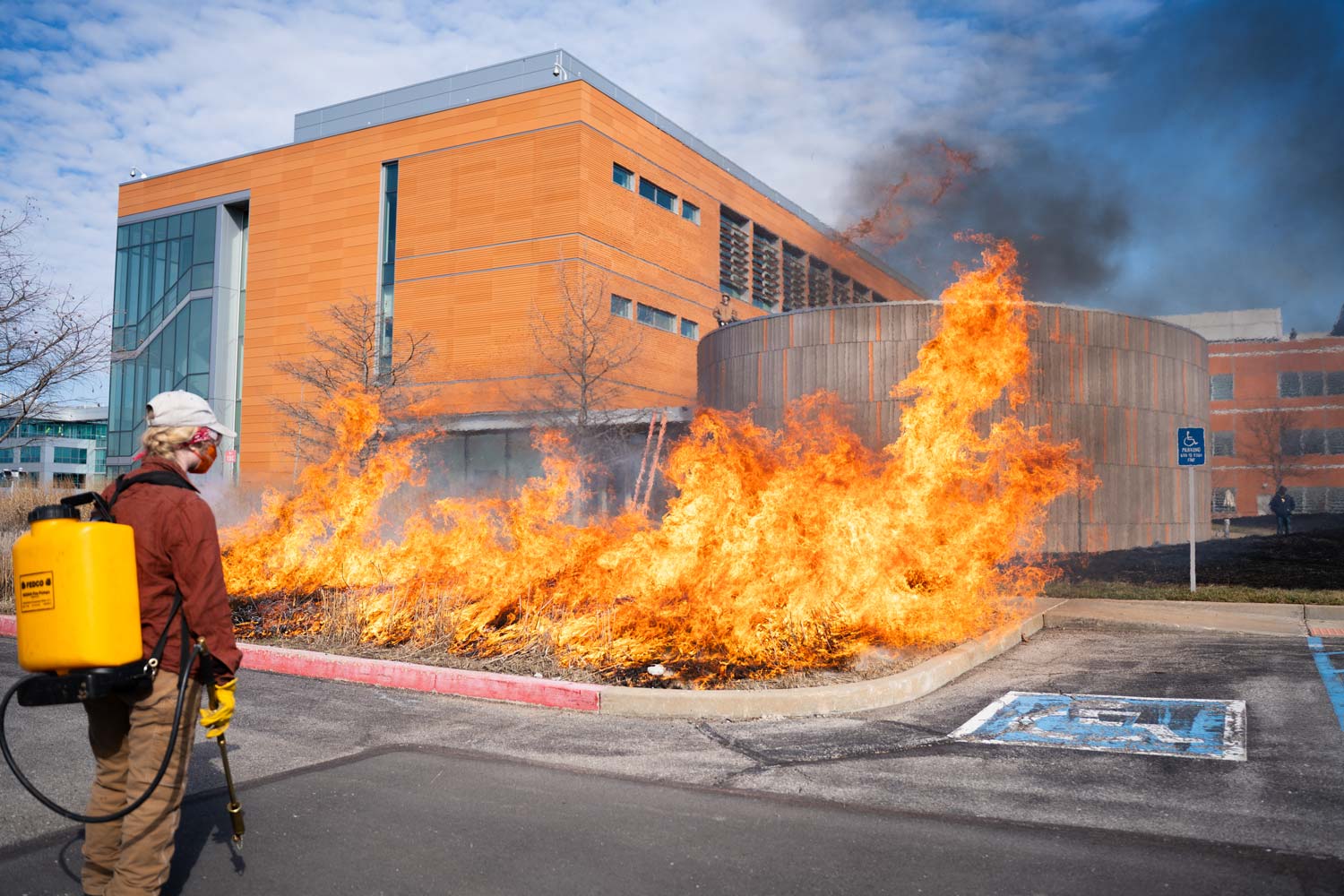
Fire consumes a small bed on the west end of the Danforth Center. Fire is necessary for prairie regeneration.
Visit the Prairie this Spring
In the days after a burn, the prairie can look stark—blackened stems and bare ground. But that’s part of the process. In spring, new growth emerges quickly, and over time the prairie responds with vigorous green-up and seasonal waves of wildflowers.
We invite the community to visit campus in the coming weeks and months. Our prairie paths are open to the public, and interpretive signs along the way share what you’re seeing—native grasses, wildflowers, pollinators, and the ecological relationships that make prairies such extraordinary systems.
Come take a walk this spring, watch the prairie wake up, and see how a place built for plant science also serves as a living classroom for sustainability.