Missouri Authentic Research Experiences
Missouri Authentic Research Experiences (AREs) provide students throughout Missouri with meaningful, hands-on research opportunities grounded in real scientific inquiry. At the Danforth Center, AREs immerse students in foundational scientific research, enhancing academic achievement, shaping future career aspirations, and fostering interest in STEM fields. Through these experiences, Missouri students begin to see themselves as future scientists. (Participation as funding allows.)
Mutant Millets Hormone Quest (MMHQ)
Length: 6 Weeks
Grade level: High School
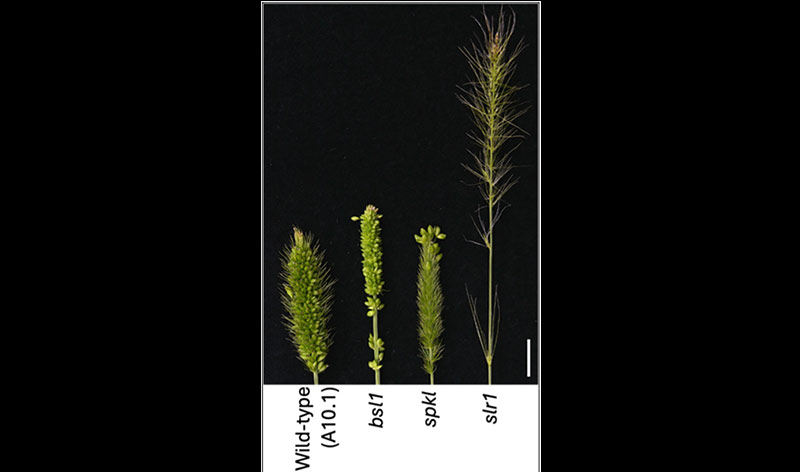
One of the most significant agricultural developments during the Green Revolution was the reduction of plant height in some crops, which contributed to improved grain yield. Plant hormones are small chemical compounds that regulate various aspects of plant growth and development, as well as plant responses to the environment. Gibberellic acid (GA) is a hormone that promotes stem elongation in plants and regulates inflorescence architecture, thereby influencing grain production.
In this ARE, students contribute to the research program of Dr. Andrea Eveland, Danforth Center Principal Investigator, who studies the genes involved in hormone regulation of seed production using the foxtail millet (Setaria viridis). Students grow mutant setaria plants, apply hormone treatments, screen for mutant phenotypes, and photograph specimens in order to identify mutant plants that do not show excessive stem elongation and that retain seeds despite GA3 treatment. Students contribute to a catalog of traits that scientists can use to improve genetically related crop grasses and gain knowledge and understanding of plant biology and hormone effects on plant growth and grain production.
AgGeoX – Predicting Sorghum Success
Length: 1-2 Weeks
Grade level: Online authentic research experience for high school level.
Sorghum, the fifth most cultivated cereal crop worldwide, excels in converting solar energy into biomass and is resilient to drought and heat stress. Sorghum is not only a food source for humans and animals, but it is also used as a bioenergy crop, meaning it can help produce fuel from plants, and is a powerful tool for carbon sequestration, making it a key player in combating climate change while supporting sustainable agricultural practices.
At the laboratory of Dr. Nadia Shakoor, Danforth Center Principal Investigator, scientists study how sorghum grows under different management practices (no-till farming, precision nitrogen application, and cover cropping) to identify which sorghum types perform best in each system in terms of yield and overall production. This information can help farmers choose the right variety for their land, which improves both economic outcomes and environmental sustainability.
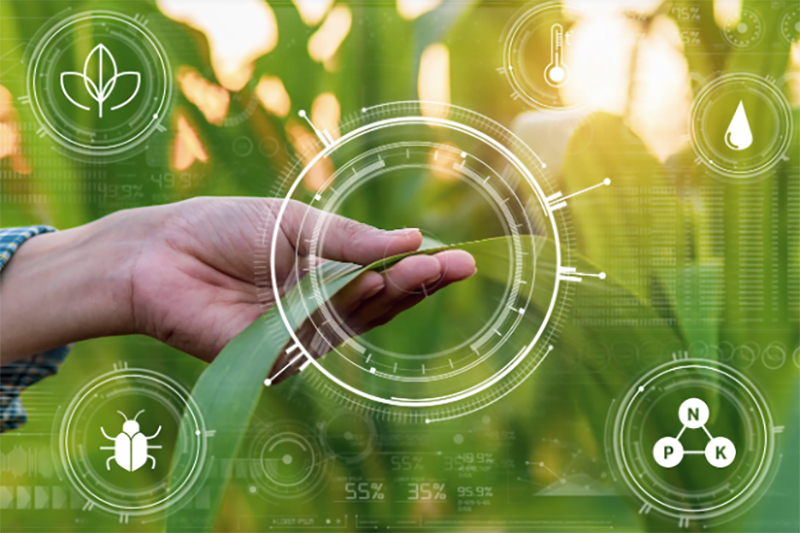
In this ARE, students combine plant science with geospatial science and machine learning to predict sorghum traits using climate, plant, and soil data. Students create heat maps to visualize real sorghum field trial data. They also build predictive models for important traits (e.g., yield, protein content), which provide insights for refining scientists’ models to improve plant performance. Students develop data science and machine learning skills and learn to use professional coding environments while exploring precision agriculture applications.
For more information visit the AgGeoX website at aggeox.org.
Discovering Volvox Development
Length: ~1-2 Weeks
Grade level: Middle and High School
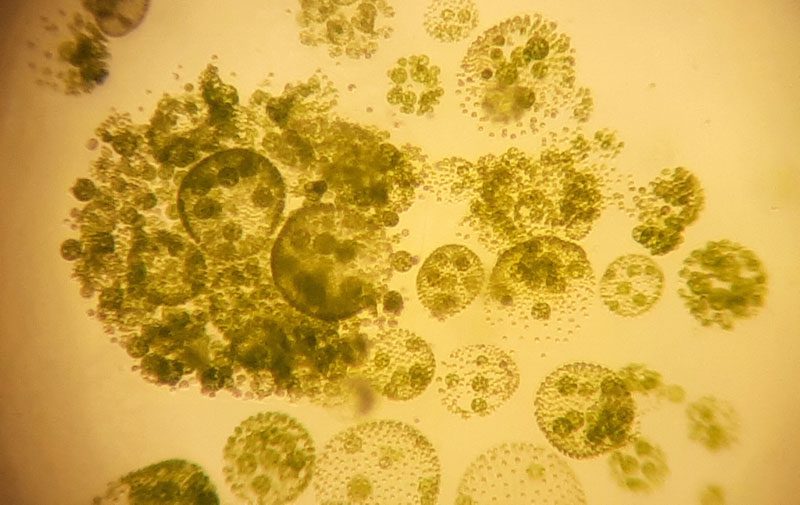
The green algae volvox (Volvox carterii) is an experimentally tractable multicellular species composed of only two types of cells, reproductive cells and a single somatic cell type. Its closest relatives are unicellular algae, making it an ideal organism to investigate genes that contribute to understanding the evolution of multicellularity. This research is conducted in the laboratory of Dr. Jim Umen, Principal Investigator at the Danforth Center, using volvox.
In the Discovering Volvox Development ARE, students care for algae populations and screen for known and unknown mutants using identification guides. They submit their observations and report unknown mutants for further investigation to assist scientists in identifying new phenotypes for gene screening. Through this experience, students learn important lessons about the concept of organismal life cycles, volvox developmental biology, the concepts of unicellularity and multicellularity, and microscopy techniques.
Genotype to Phenotype
Length: ~2-3 Weeks
Grade level: 8th Grade and High School
Leaf angle in corn plants plays a role in determining plant density (how many plants can be grown per acre) and yield (the number of ears of corn that are produced per acre). In the laboratory of Dr. Eveland, a Principal Investigator at the Danforth Center, research is being conducted to identify genetic factors that regulate variation in leaf angle.
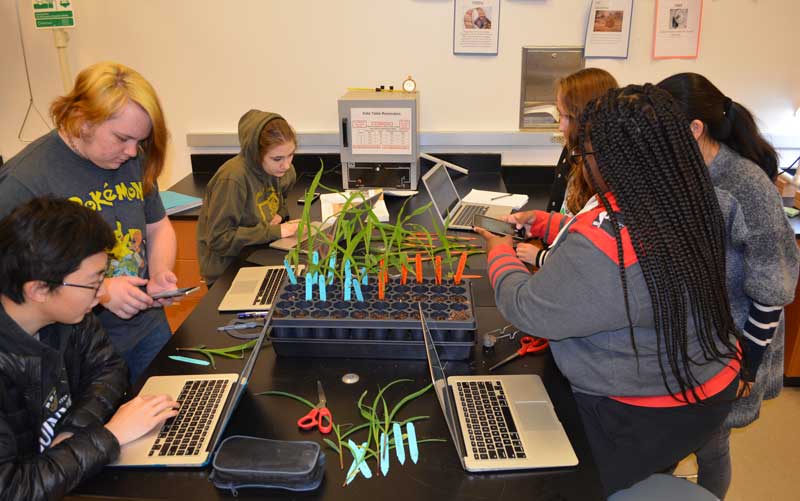
In the Genotype to Phenotype ARE, students grow corn seedlings of hundreds of genotypes and measure the leaf angles manually and digitally, comparing their results among genotypes and measuring methodologies. An optional molecular lab module allows advanced students to use PCR and gel electrophoresis to examine genetic markers related to corn architecture. In an optional second exercise, students test for the presence of specific changes in the DNA of the corn plants in order to understand the correlation between these genotypic changes and variations in the phenotypes (physical characteristics) of the plants. By screening hundreds of corn genotypes, students contribute molecular and phenotypic data that can help the Eveland lab develop predictive models to determine the leaf angle of an adult plant based on seedling data.
Through this experience, teachers and students learn genetic concepts and the relationship between phenotype and genotype as they relate to agriculture, food security, and data science.
Plants Fight Back
Length: 2-3 Weeks
Grade Level: High School
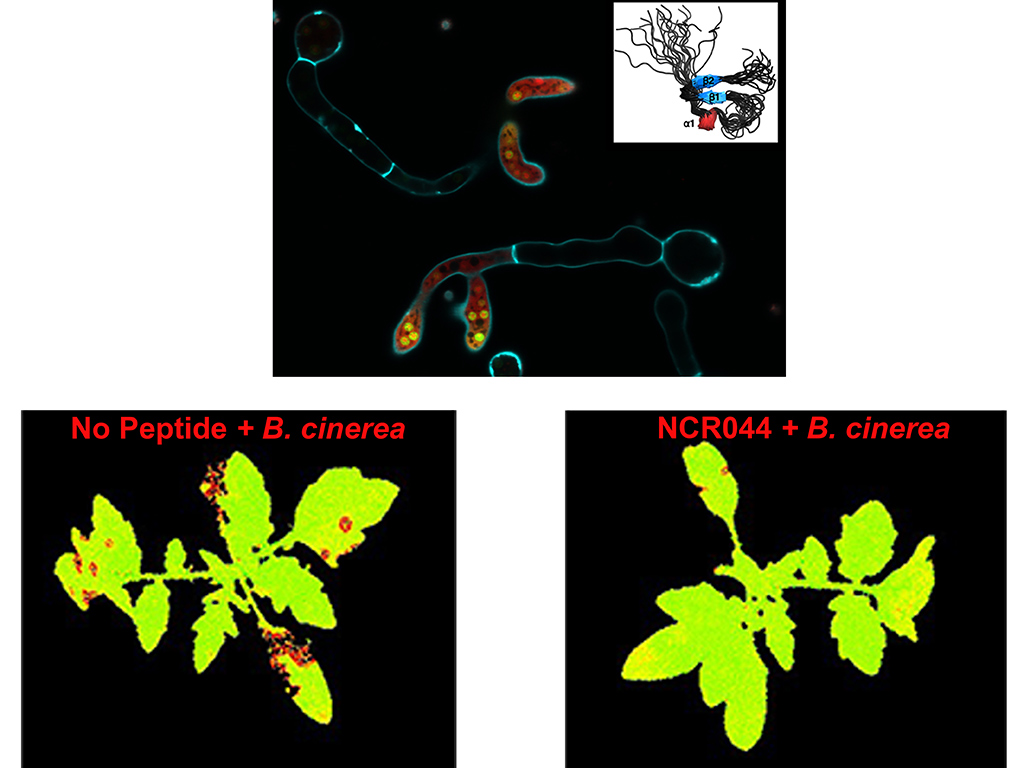
Plant fungal diseases such as wheat head scab, rice blast, soybean rust, and banana black sigatoka are a major threat to food security. Fungal diseases cause 12-15% yield losses in crops worldwide, while the fungicide market is a multi-billion-dollar industry. The laboratory of Dr. Dilip Shah, Principal Investigator at the Danforth Center, investigates the effectiveness of plant-derived antifungal peptides against crop diseases without the use of synthetic fungicides.
In the Plants Fight Back ARE, students grow fungal pathogens under laboratory conditions, conduct in planta infection assays, and observe infection processes to evaluate peptide effectiveness. Students submit their measurements of peptide effectiveness to enrich scientists’ databases of plant responses to antifungal treatments. Through this ARE, students learn about fungal biology, plant defense mechanisms, the development of peptide-based biofungicides for sustainable agriculture, and the connections of these challenges to global food production.
A Brighter Tomorrow
Through our authentic research experiences and course-based undergraduate research experiences, the Danforth Center is dedicated to supporting future and early-career scientists and believes in the power of education and outreach to create a better future for all. If you would like to support the next generation of scientists, click here to make a donation today.
Questions? Contact Us