Urban Prairie Beekeeping: A Living Laboratory for Bees, Beekeepers, and Biodiversity
Prairie ecosystems boast a long list of benefits for pollinators, birds, and soil. At the Danforth Center's six-acre reconstructed prairie, another benefit is the thriving urban prairie beekeeping community it has helped cultivate.
A few times a month, dedicated volunteers from the Eastern Missouri Beekeepers Association (EMBA) suit up to tend a small cluster of hives at the edge of the prairie—and teach anyone who's curious enough to show up.
It's a scene that has played out here for over a decade. EMBA members call the site a "learning yard," a place where newcomers can stand shoulder to shoulder with seasoned beekeepers and learn by doing. The partnership is a natural fit: both EMBA and the Danforth Center are rooted in curiosity, stewardship, and a belief that healthy ecosystems matter.
A Pollinator Paradise
Researchers, students, and community visitors have long referred to the prairie as a living laboratory, and Danforth Center scientists have documented just how much life it supports. In one scouting effort, researchers identified forty percent of Missouri's common butterfly and moth species right here on these grounds, alongside bees, wasps, flies, and dozens of other insects. It's a remarkable finding for an urban prairie and a testament to the power of habitat restoration.
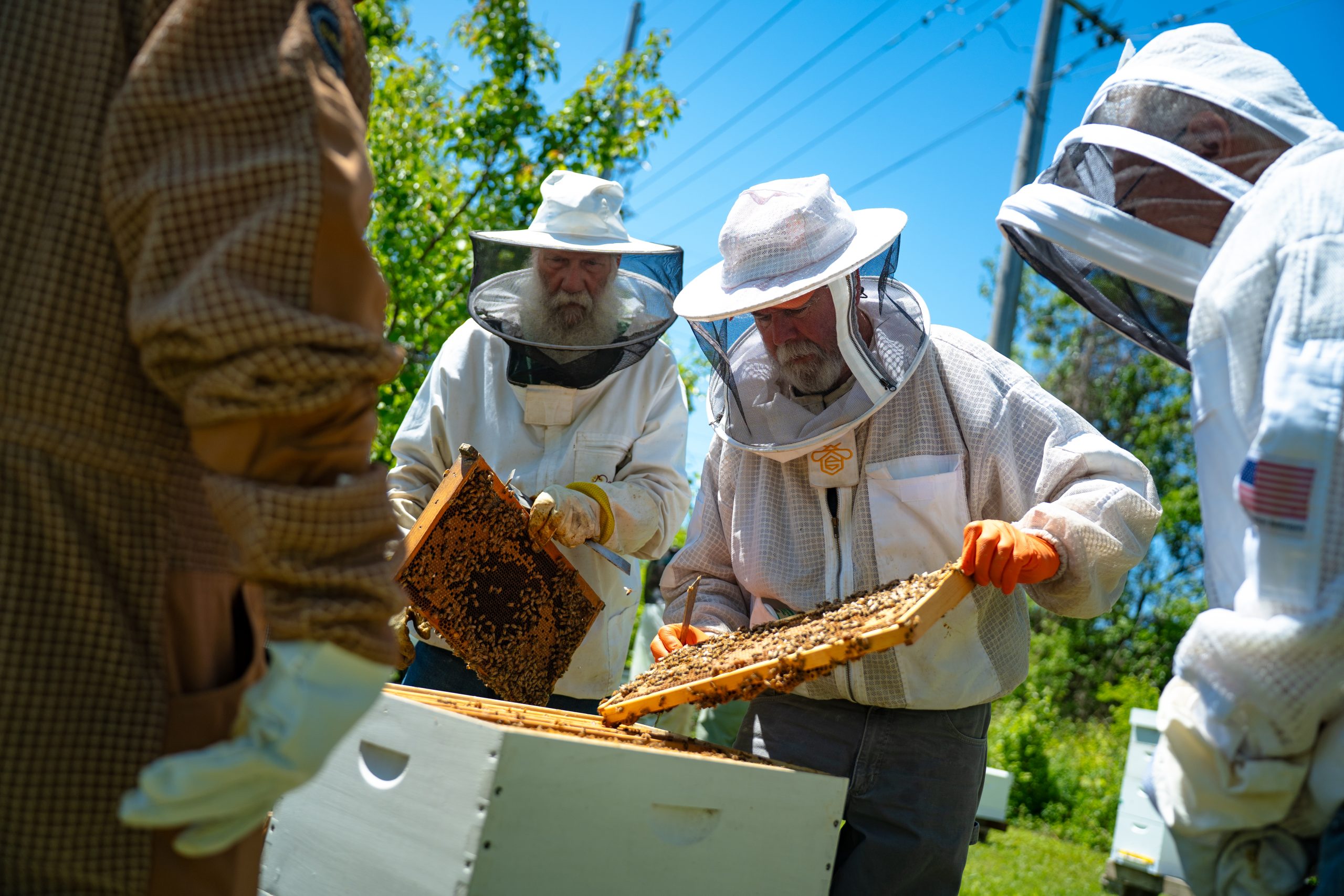
Eastern Missouri Beekeepers Association (EMBA) members Dale and Jerry pull frames from the beehives at the Danforth Center prairie to check the health of the hives.
The prairie serves as both a home for native insects and an oasis for migratory birds and butterflies. "Without flora diversity we lose the diversity of insects; amphibians and reptiles begin to decline; and a ripple effect moves up the food chain, ultimately impacting humans," says Danforth Center Research Technician Crystal Camp, who participated in the most recent count. "We need these ecosystems to sustain life."
EMBA Board Member Michael Kilfoy, who has been coming to the Danforth Center learning yard for years, sees the honeybee hives as part of that larger ecological picture. "Some worry that European honeybees compete with native bees, but it's more complicated than that," he says. "Certain native plants support certain native bees or caterpillars, which support certain birds…it's all interconnected. Nature is a lot more complex than people give it credit."
A Living Lab
Kate Smith, who has been a member of EMBA for over ten years, recently led visitors through a queen check, an inspection to confirm that every hive has exactly one healthy, active queen. She has the calm, methodical presence of someone who has done this hundreds of times, but who still finds meaning in sharing her knowledge.
Ask Kate why an urban prairie beekeeping site like this matters, and she doesn't hesitate. "This is a great place to have," she says. The learning yard gives beginners a chance to work alongside experienced beekeepers in a real, hands-on environment.
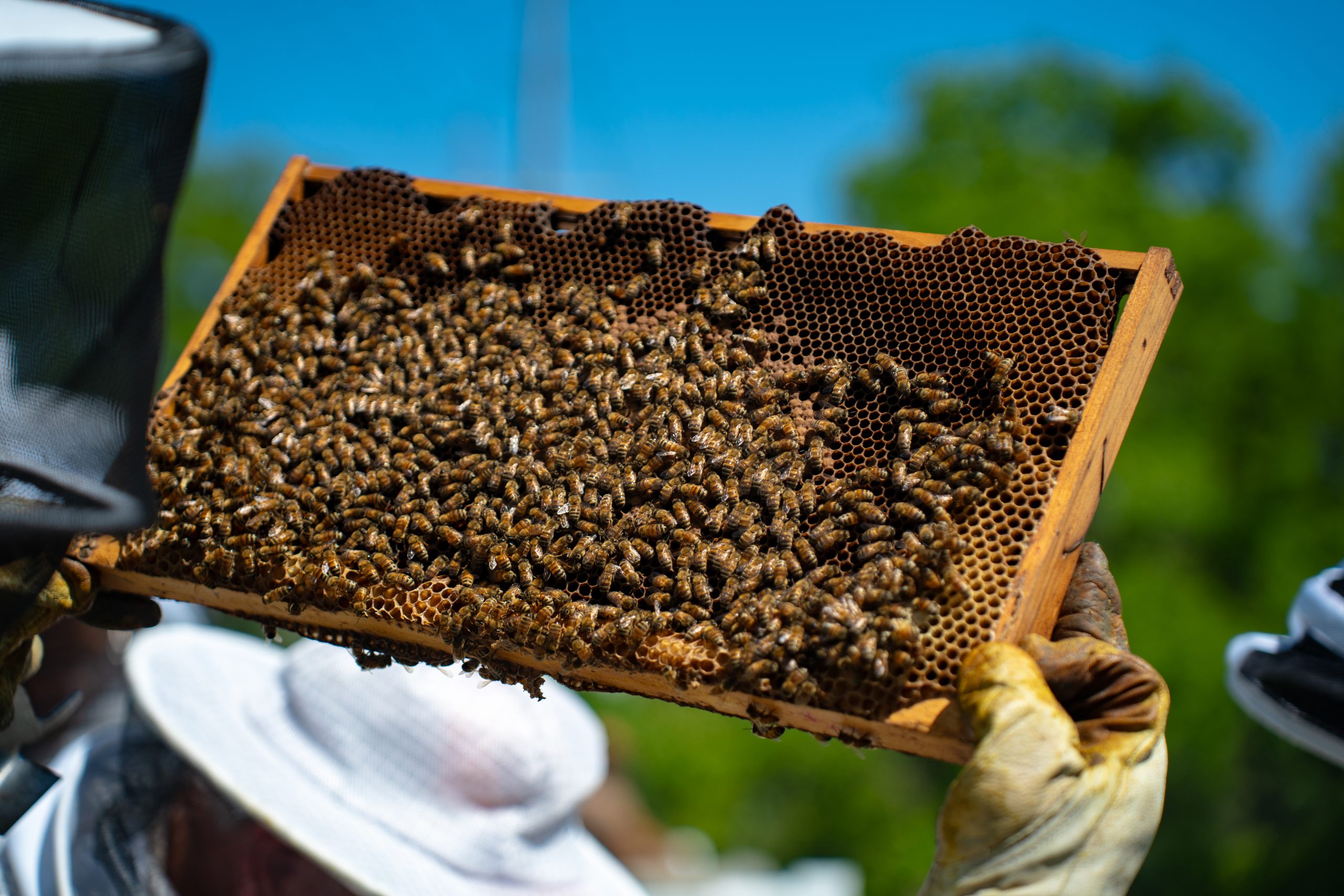
Inspections like these allow beekeepers to see honeybees up close and manage hives for any potential pests, diseases, or other concerns.
EMBA is the oldest beekeeping organization west of the Mississippi. It's a volunteer-driven group built on generosity and shared knowledge. Michael remembers the Danforth Center learning yard as the place where his own confidence grew. "This yard has some good memories," he says. "This is the place where I went from only kind of knowing what I was doing to feeling really confident."
Fellow EMBA member Melissa Catalano has been coming to the learning yard since she was a brand-new beekeeper. "The first year I was a keeper, I came here religiously," she says. Now she's one of the more experienced beekeepers doing a lot of the teaching.
"The whole point is being a mentor for others," she says. "This is a pay-it-forward community. Someone teaches you; you teach the next person."
Native Plants For All
Native ecosystems can be a big relief for bees as threats to pollinators grow increasingly complicated. Pests and diseases are harder to manage, and pesticide exposure can wipe out an entire hive overnight.
Kate also points out the value of the prairie itself. There are millions of acres of lawn in the US, with turf grass often cited as the largest irrigated crop in America. "And it's nothing but eye candy," she says. She'd rather see all that space growing native plants, one yard at a time.
Michael is well aware of the responsibility that comes with keeping bees. "Our core mission really is to promote good beekeeping," he says. "Being a good beekeeper means keeping practices that help prevent swarming, pests, disease…because hives near each other affect each other. You have to be a good steward of your hives."
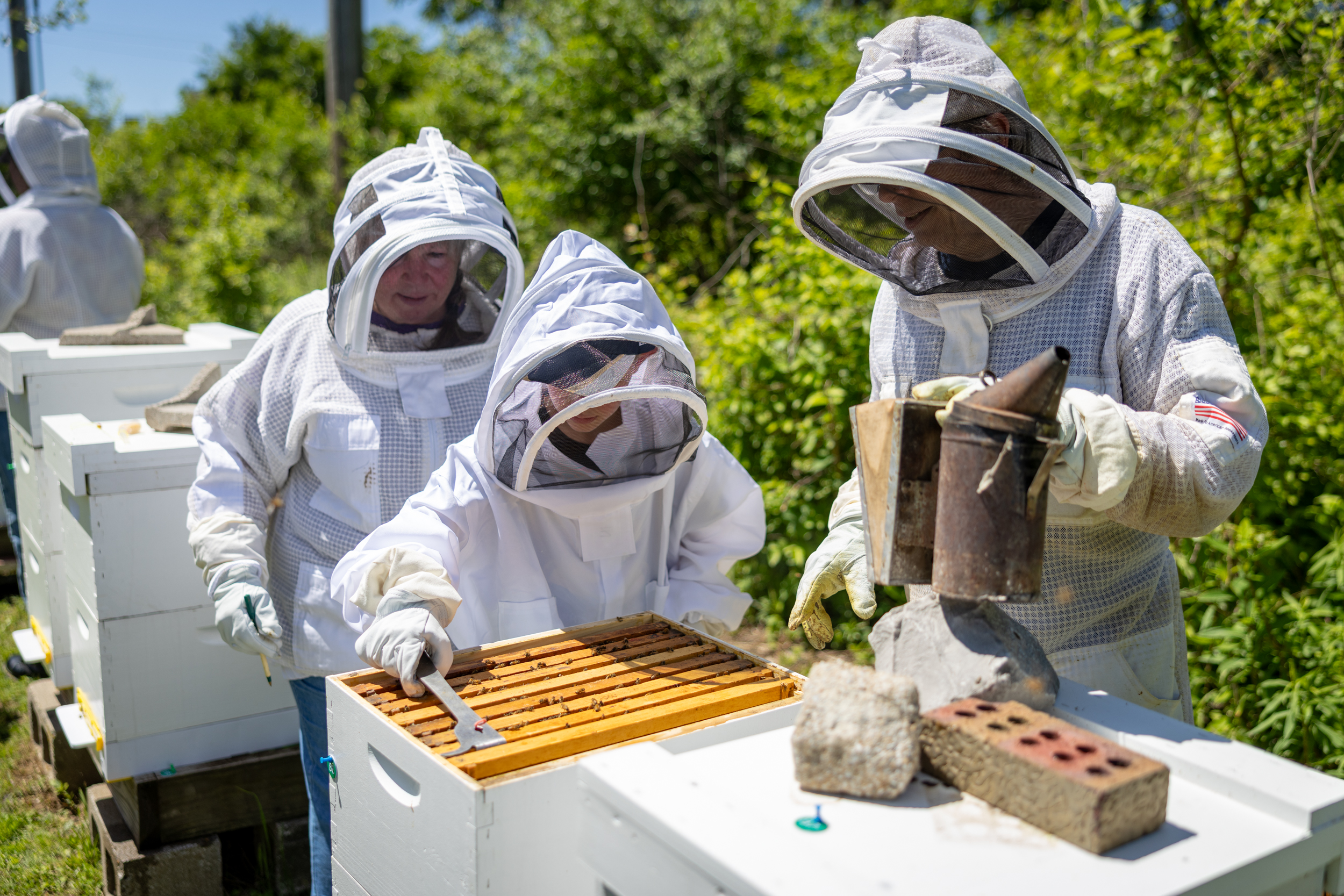
EMBA's Open Apiary Days connect beekeepers of all levels with hands-on experience alongside experts, helping educate the next wave of responsible beekeepers. Photo by Michael Kilfoy.
That stewardship matters beyond the hives themselves. More local beekeepers means more people who understand pollinators, native plants, and where their food comes from. It's a goal the Danforth Center works toward every day: ensuring the world has access to safe, sustainable, and reliable food.
Kate's advice for anyone who wants to help is simple: plant native plants. Both native bees and managed honeybees will benefit, and so will everything that depends on them.
The Danforth Center's prairie was built on the belief that restoring native habitat in an urban setting is worth doing. EMBA has been proving that right for over a decade. Together, they've created a space where urban prairie beekeeping and habitat restoration reinforce each other.
Why It Matters
Bees make honey. They also make food systems work. The Danforth Center believes that protecting biodiversity is essential to ensuring both healthy food and healthy people. When we restore native habitat and support pollinators, we're investing in the resilience of the living world that feeds us all.