Feeding the Hungry World Through Orphan Crops
Guest blog by Postdoctoral Associate Sherin Thomas
One of my earliest and most vivid childhood memories is of cassava growing all around us. I am native to Kerala, a tropical state in southern India, where cassava occupied a special place in everyday life. It was everywhere; in home gardens, roadside farms, and local markets. Cassava appeared on our dining table in many forms: served with spicy fish curry, paired with meat, or simply enjoyed as a snack.
As a child, I assumed cassava was native to Kerala and unique to our cuisine. Years later, I learned that it was introduced by Portuguese traders a few centuries ago, and that it became a staple food during period of hardship in India.
By the time I was growing up, cassava had shifted from a staple food to a comfort food as rice and wheat became more common in Kerala. I never imagined that somewhere else in the world, millions of people still depended on cassava every day for their survival. That realization resurfaced unexpectedly one day as I walked through the greenhouses at the Danforth Center and spotted thriving cassava plants among the research crops. I had never seen cassava growing inside a research greenhouse before, and it immediately made me wonder why it was there!
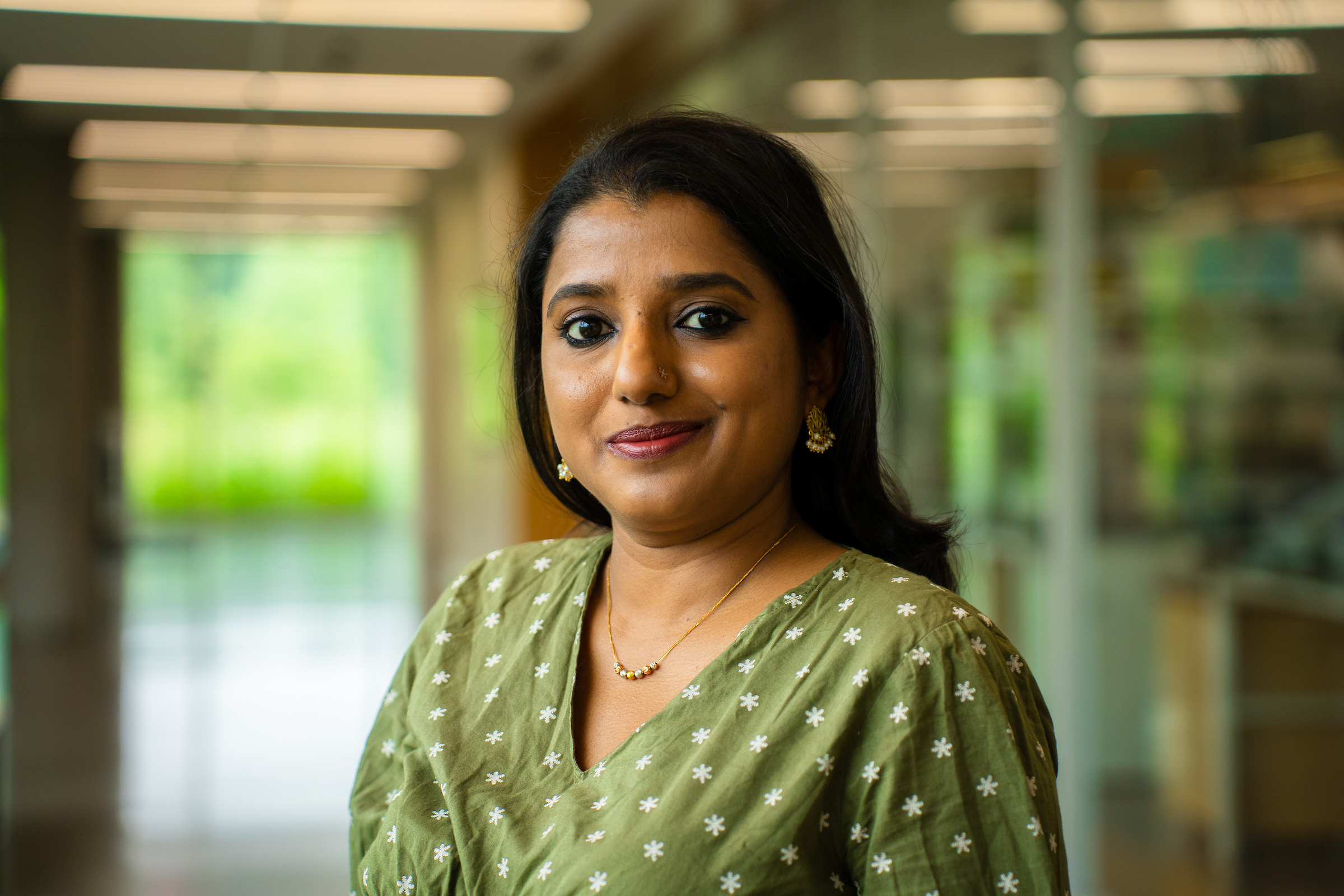
Sherin Thomas is a postdoctoral associate at the Danforth Plant Science Center.
Seeing it here prompted a series of questions. What determines which crops receive scientific attention? Who decides where research funding goes? That question pulled me back to a memory from my PhD years—a lecture on global food security given by a well-known, eloquent scientist. He closed his talk by arguing that the world needed still more biotechnology to feed a growing population.
"Don't you think," I asked, "that the world already produces enough food? Developed countries spend millions of dollars disposing of surplus food, while millions continue to starve. Maybe,” I suggested, “the solution lies not only in new technologies, but also in better policies."
"I am a scientist," he replied. "Changing policy is not my job."
Over time, I came to appreciate his perspective. Science and policymaking simply run on different tracks. Still, one question stuck with me: what exactly is a scientist's responsibility? Should science be able to stay detached from the society it's meant to serve?
Recently, I read an article titled “It Took 35 Years to Get a Malaria Vaccine. Why?” The contrast it described was striking. COVID-19 vaccines were developed and authorized within a year, while an effective malaria vaccine required more than three decades. Certainly, developing vaccines against a complex parasite presents enormous scientific challenges. But there is another reason that was impossible to ignore; malaria primarily affects children in sub-Saharan Africa, and for a long time it simply wasn't treated with the same urgency as diseases affecting wealthier populations.
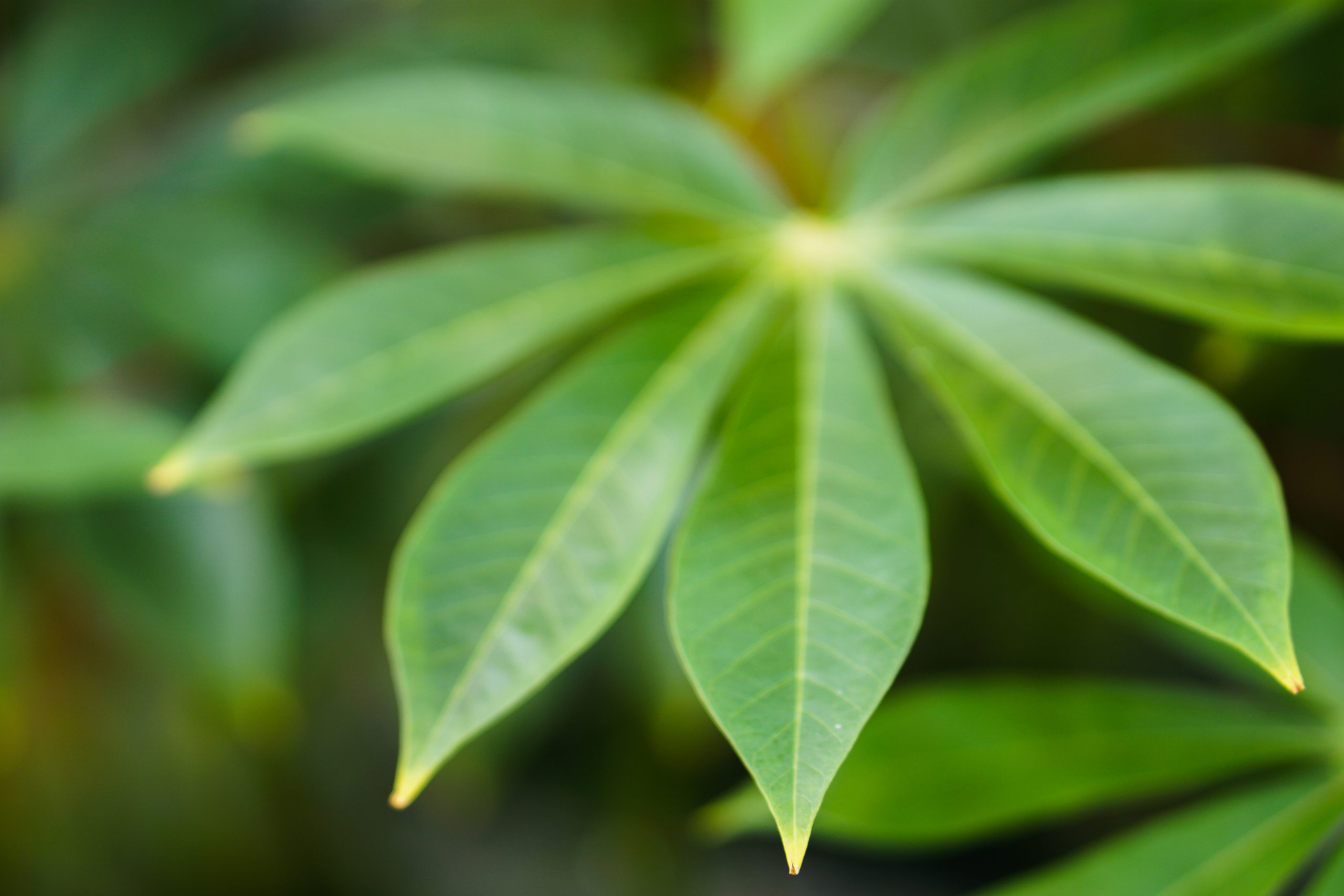
Cassava, an "orphan crop" sustains more than a billion people worldwide.
Cassava has never been a major crop in the developed world. Many people in high-income countries have never eaten it; perhaps that is why I rarely encountered cassava in research institutions throughout my career.
Yet globally, cassava remains one of the most important food crops on the planet. More than 1 billion people, especially in sub-Saharan Africa, depend on cassava as a staple because it thrives under drought, poor soil, and low-input farming conditions. Despite that, it received far less research funding than staples like wheat, maize, or rice. It's part of a category sometimes called "orphan crops "- species that are essential for food security in certain regions of the world but chronically overlooked by mainstream science. Cassava is not alone. Many indigenous crops that support millions of people receive only a fraction of global research investment because they remain outside the focus of agriculture in wealthier countries.
But nearly one in ten people worldwide experience chronic hunger. While wheat, rice, and maize remain essential crops, they are not always suited for regions facing drought, extreme heat, degraded soils, and climate change. So if policy reform alone can't solve hunger, what's left for scientists to do?
Standing in front of that cassava plant in the Danforth greenhouse, I felt like I'd finally landed on an answer I'd been circling for years. The greenhouse was not simply growing cassava; It represented a different philosophy of science. Alongside cassava were teff, sorghum, cowpea, millets, and other orphan crops. Across the Danforth Center, researchers are developing improved varieties that resist disease, tolerate environmental stress, and deliver better nutrition.
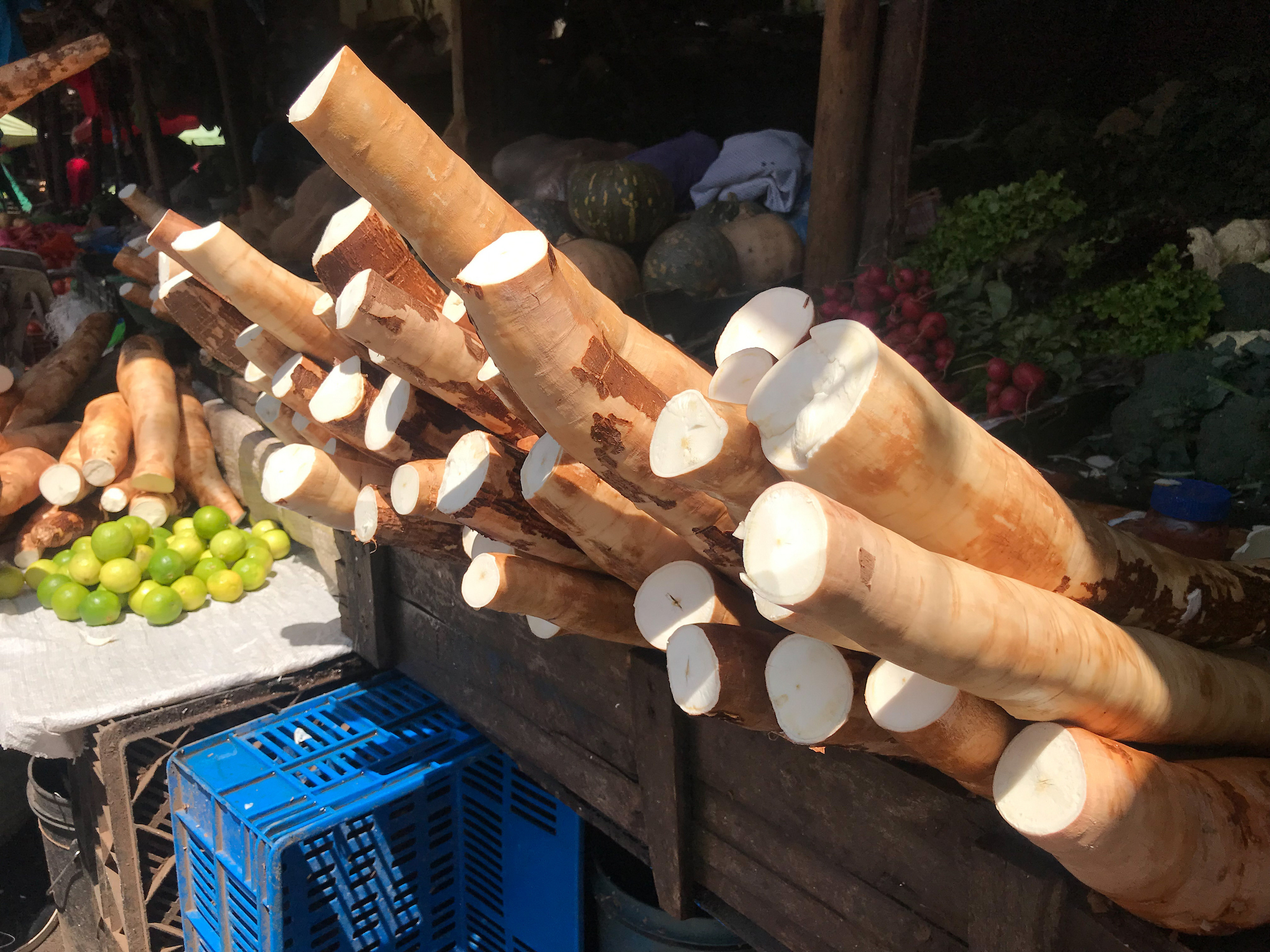
Fresh cassava roots at a local market.
None of that happens alone; it takes collaboration among scientists, governments, nonprofits, and philanthropic funders around the world, all recognizing that food security requires innovation built not just for major agricultural powers, but for the places where hunger is still an everyday reality.
The Danforth Center describes its mission as improving the human condition through plant science. After spending the past two years here, I've come to see that this isn't just a tagline. It is a mission reflected in the plants growing inside its greenhouses, in the questions its scientists choose to ask, and in the people who we are ultimately trying to help.
Sometimes, the purpose of science becomes clear not through a breakthrough experiment or a published paper; sometimes it shows up quietly, in the shape of a familiar cassava plant, growing somewhere you never expected to find it.
How You Can Help
This work, and the partnership behind it, is just one example of our broader effort to help fight hunger here and around the world. By making a gift to the Danforth Center's Future Forward campaign, you can support our efforts and be part of creating a better, more food-secure tomorrow.